
Utility Line Installation in Northeast Connecticut
Trenching and installation for well water lines, sewer and septic lines, and underground electrical service.
Underground utilities are the work nobody sees and everybody notices when it goes wrong. A water line that was buried too shallow freezes in January. A sewer line laid without consistent pitch backs up into a basement. A conduit run without proper bedding gets crushed and takes an excavator to diagnose. All of these problems are cheap to prevent while the trench is open and expensive to fix once the ground is closed up and the lawn has grown back.
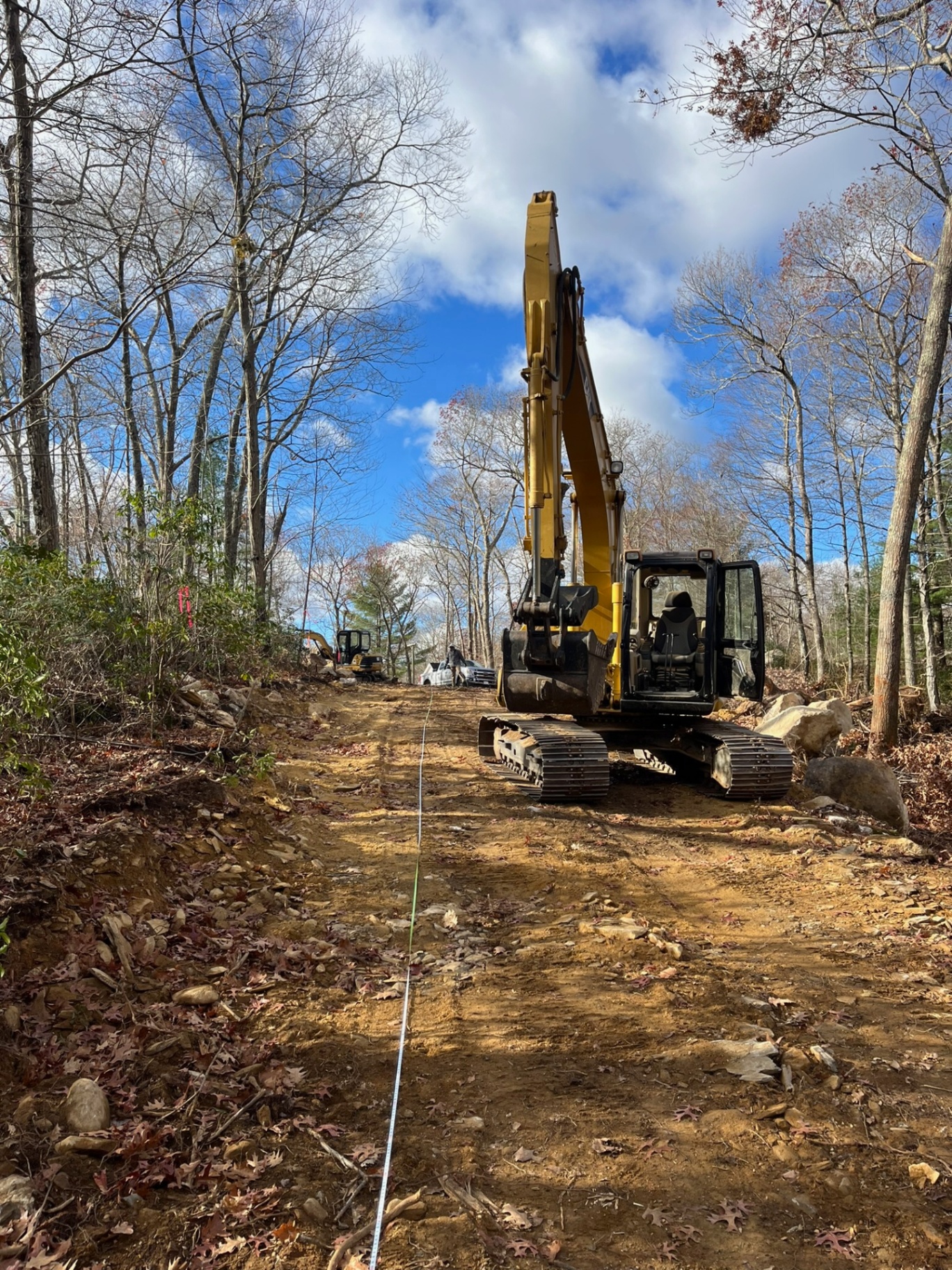
The fundamentals are the same for every buried line. Everything starts with a Call Before You Dig markout, which is required in Connecticut and free to request — we will not open ground without it. From there it is about depth, bedding, and backfill. Depth has to satisfy frost protection for water lines and code requirements for electrical. Bedding means the pipe or conduit sits on sand or screened material rather than directly on rock or frozen clumps. Backfill goes in lifts, with the material immediately around the line free of stone, so nothing settles down onto the run later. Where trenches cross a driveway or a future structure, we compact accordingly so you do not get a trench-shaped dip a year from now.
Northeast Connecticut adds its own complications. Most properties out here are on private well and septic rather than public utilities, so a single trench may carry a water line, a pump conduit, and a communications line all at once — each with its own separation requirement. Ledge shows up often enough that we plan for it. Wet ground and high water tables are common in the low areas, which affects how a trench is dewatered and shored. And plenty of older properties have undocumented lines running in unexpected places, so we dig carefully near anything that could be live and expose by hand when the situation calls for it.
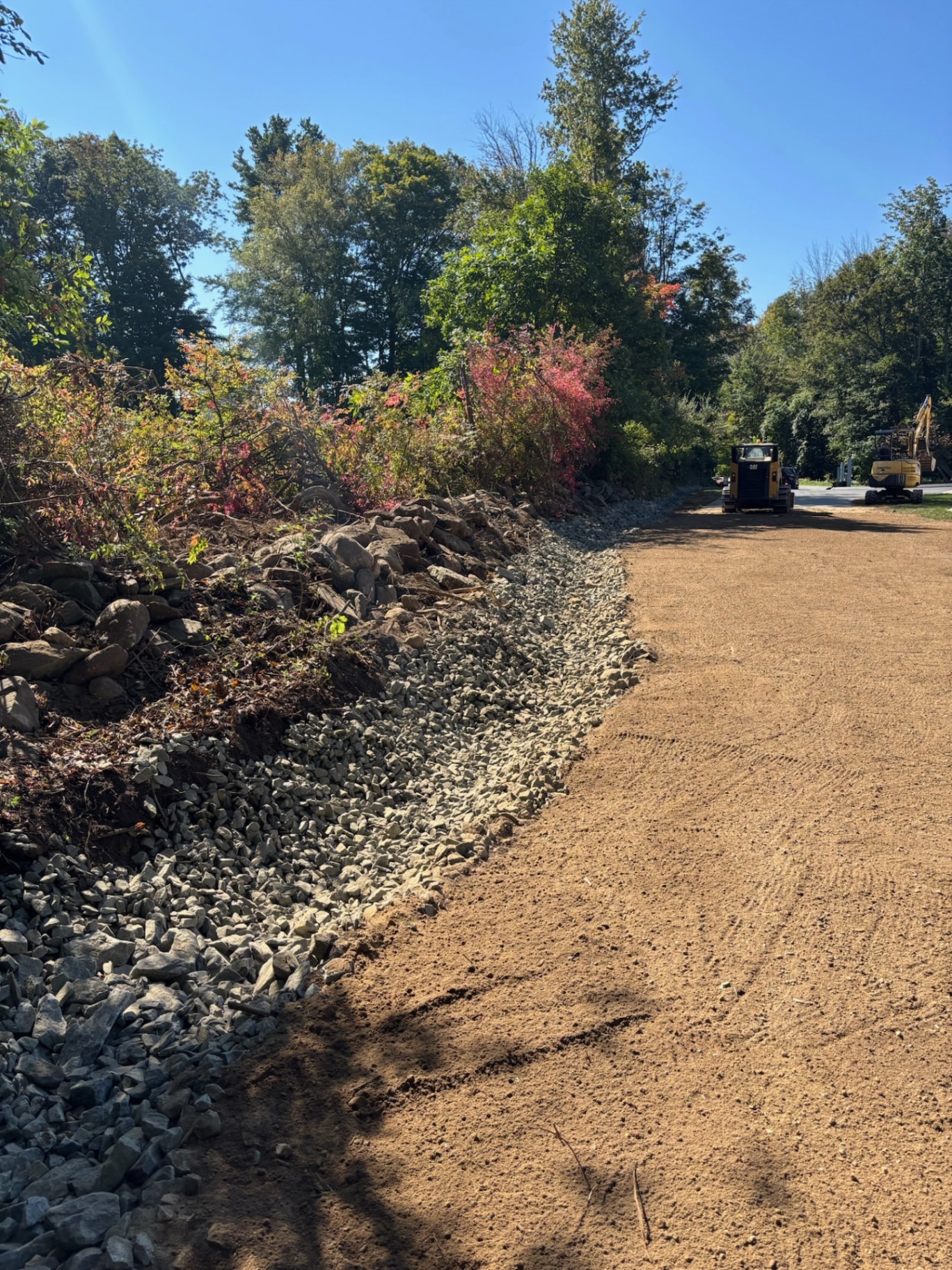
We handle the excavation, pipe and conduit placement, and restoration, and we coordinate with the licensed trades who own their portion of the work — your electrician for terminations, your plumber for the interior connections, your septic installer and the local health district for system design and inspection. When the work is done, the trench is backfilled properly, the ground is graded back, and the site is left in a condition you would not be embarrassed to show a neighbor.
Types of Utility Line Work
Well Water Lines
Most properties in Northeast Connecticut are on a private well, which means the line from the well head to the house is your responsibility, not a utility's. That line has to be buried below frost — generally around four feet in this climate, and deeper where the ground is exposed or the driveway crosses it — because a water line that freezes once will usually freeze every year after that.
We trench from the well casing to the foundation, install the pitless adapter connection area, bed the line in sand or screened material so it is not resting on rock, and run the electrical conduit for the pump in the same trench where the setup calls for it. The line is pressure checked before we cover it, and we backfill carefully in lifts so nothing settles onto the pipe. We also handle replacement of old, undersized, or leaking well lines, including tracking down the leak when a property is losing pressure and nobody knows where the water is going.
- Trenching from well head to house below frost depth
- Water service line installation and replacement
- Pitless adapter and foundation entry excavation
- Pump electrical conduit run in the same trench
- Leak location and repair on existing well lines
- Sand bedding, pressure check, and lift backfill
Sewer & Septic Lines
Sewer and septic lines fail for two reasons: pitch and bedding. A gravity line that is too flat lets solids settle out, and one that is too steep lets the water run away and leave the solids behind. Either way you get a blockage. Getting the slope right and holding it consistently over the whole run is the entire job, which is why we shoot grade rather than eyeball it.
We install and replace building sewer laterals to a municipal main where sewer is available, and house-to-tank and tank-to-leach-field lines on septic systems. That includes excavating and setting the pipe on properly prepared bedding, installing cleanouts so the line can be serviced later without digging, connecting to tanks and distribution boxes, and backfilling without deforming the pipe. On septic work we coordinate with your installer, engineer, and the local health district, since system design and inspection are handled through them.
- Building sewer lateral installation and replacement
- House-to-tank and tank-to-field septic line runs
- Laser or laser-checked grade for consistent pitch
- Cleanout installation for future servicing
- Tank and distribution box excavation and connection
- Excavation support for septic repairs and replacements
Underground Electrical Lines
Underground electrical is the utility with the least room for improvisation. Depth, conduit type, warning tape, and separation from other utilities are all spelled out by code and by the utility company, and an inspector will check them. We dig to the required depth, install and bed the conduit, place warning tape at the specified height above the run, and leave the trench open for inspection before backfilling.
Typical work includes bringing a new underground service from the pole or transformer to the house, running power out to a garage, barn, shop, or well pump, and replacing old direct-buried cable that has failed. We do the excavation and conduit placement and coordinate with your licensed electrician, who makes the terminations and pulls the permit — we do not perform electrical work ourselves. Before any of it, we make sure the site is properly marked. Call Before You Dig markout is required in Connecticut, it is free, and no responsible contractor puts a bucket in the ground without it.
- Trenching for new underground electrical service
- Conduit installation, bedding, and warning tape
- Runs to garages, barns, shops, and outbuildings
- Replacement of failed direct-buried cable
- Trench left open for inspection before backfill
- Coordination with your licensed electrician and Call Before You Dig markout
What's Included
- Call Before You Dig markout coordination
- Trench layout, excavation, and dewatering as needed
- Well water line installation and replacement
- Sewer lateral and septic line installation
- Underground electrical conduit trenching
- Sand or screened bedding under every run
- Cleanouts, sleeves, and foundation penetrations
- Multi-utility trenches with proper separation
- Trench left open for required inspections
- Compacted lift backfill, including under driveways
- Existing line locating, leak finding, and repair
- Final grade and site restoration over the trench
Frequently Asked Questions
Towns We Serve
We work throughout Windham County and the surrounding Northeast Connecticut towns.
Ready for a Free Estimate?
Tell us about your project and we'll walk the site, talk through the options, and give you a straightforward, no-obligation price.